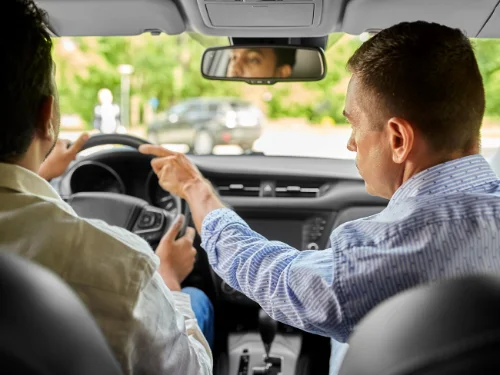
What Manual Driving Lessons Involve
As lessons progress, manual learners begin combining clutch control with steering, mirror checks and hazard awareness, gradually building toward independent driving. This includes practising in traffic, at junctions, and eventually on roads with roundabouts, all while managing gear changes appropriately for the situation. Instructors usually introduce these elements in a logical order so that manual coordination becomes automatic before more complex traffic scenarios are added.
Manual lessons also cover manoeuvres required for the practical driving test, such as reversing exercises and parking, all of which involve additional clutch control demands compared with automatic vehicles. Learners often find manoeuvres more challenging in a manual car initially, since clutch control at low speed requires more precision than simply using the accelerator and brake. Regular practice of these manoeuvres helps build the fine control needed for smooth, controlled movements.
Throughout manual lessons, instructors assess a learner's developing skills and adjust the pace accordingly. Some learners progress through clutch control quickly and move on to traffic situations within a few lessons, while others benefit from more repetition before advancing. Because manual driving involves more physical coordination than automatic driving, lesson pacing is typically more individual than with automatic tuition.
Morden offers a mix of driving conditions that suit the different stages of manual learning. Quieter residential streets around the town provide a reasonable starting point for early clutch control practice, where learners can focus on smooth moving off and gear changes without the added pressure of heavy traffic. As confidence builds, instructors introduce busier roads closer to Morden town centre, where traffic volume and pedestrian activity require more attention alongside gear management.
Morden town centre itself, near the London Underground station, tends to be busier with traffic, buses and pedestrians, making it a useful environment for learners who have already developed reasonably confident clutch control. Managing gear changes while also monitoring pedestrian crossings, bus stops and other road users helps learners build the kind of multi-tasking ability the practical test requires. Instructors typically introduce this type of driving once basic manual control is secure, rather than in the earliest lessons.
Learning to Drive Manual in Morden's Roads and Junctions
Junctions and roundabouts around Morden give learners the chance to practise selecting the correct gear on approach, judging appropriate speed, and coordinating clutch control with observation. Roundabouts in particular require learners to manage gear changes while checking mirrors, signalling and assessing gaps in traffic, which is a skill combination that benefits from repeated practice. Instructors often revisit the same junctions across several lessons so learners can build familiarity before facing similar situations independently.
The routes connecting Morden to nearby areas, including Wimbledon, Mitcham and Sutton, also offer learners exposure to slightly different road types, from dual carriageway sections to more built-up local roads. This variety is useful for manual learners because it means practising gear changes across a range of speeds and traffic densities, rather than becoming used to only one type of road. Instructors typically introduce these routes as a learner's confidence and general control improve.
Learners preparing for their test benefit from practising on roads similar to those likely to be used during the practical exam, including a mix of residential streets, town centre traffic and roundabouts. While no specific route can be guaranteed in advance, becoming comfortable with the general driving conditions around Morden helps learners feel more prepared for whatever combination of roads appears on test day.
Clutch control is usually the first significant challenge for manual learners, and getting comfortable with it early makes the rest of manual driving considerably easier. The clutch pedal disengages the engine from the wheels, allowing gears to be changed and the car to be brought to a smooth stop without stalling. Finding the "biting point," where the clutch begins to engage the engine, is the key skill new manual learners need to develop before moving on to more complex driving.
Instructors typically teach clutch control using a step-by-step approach, starting with the car stationary so learners can feel the biting point without the added pressure of moving. From there, learners practise moving off smoothly, often on a flat, quiet road, before progressing to slight inclines and eventually hill starts, which require more precise clutch and accelerator coordination to prevent the car rolling back.
Clutch Control and Gear Changes for Beginners
Gear changes are introduced once clutch control feels reasonably secure. Learners are taught to match gear selection to road speed and situation, moving up through the gears as speed increases and down again when slowing for junctions, roundabouts or traffic. Early gear-change practice often focuses on smoothness and timing, since jerky or late gear changes can affect vehicle control and are commonly picked up as a fault during driving tests.
A common area of difficulty for beginners is coordinating clutch release with accelerator input, particularly when moving off on an incline or in slow-moving traffic. Stalling is a normal part of learning manual driving and is not something instructors expect learners to avoid entirely in early lessons. With repeated practice, most learners develop a natural feel for the clutch that requires less conscious thought over time.
As manual coordination becomes more automatic, learners are able to devote more attention to observation, hazard awareness and decision-making rather than focusing primarily on clutch and gear mechanics. This shift usually marks a turning point in lessons, where sessions move from largely skills-focused practice toward more realistic, test-style driving that combines manual control with the wider skills needed to drive independently.
The number of manual driving lessons a learner needs varies considerably and depends on factors such as prior driving experience, natural coordination, lesson frequency and confidence levels. Complete beginners typically need more lessons than someone who has previously had informal practice with a manual car, since clutch control and gear changes take time to become second nature. There is no fixed number of lessons that applies to every learner, and progress is best measured against a learner's own development rather than a general average.
Lesson frequency has a noticeable effect on how quickly manual skills develop. Learners who have lessons close together, such as weekly or more frequently, often retain clutch control and gear-change skills more consistently than those with long gaps between sessions, since manual coordination benefits from regular reinforcement. Some learners choose more concentrated blocks of lessons for this reason, particularly if they are working toward a specific test date.
How Many Manual Driving Lessons You Might Need
Prior experience also plays a role. Learners who have never driven a manual car before typically need dedicated early lessons focused purely on clutch control before other skills are introduced. Learners with some manual experience, even informal practice outside of formal lessons, may progress through the basics more quickly and spend more lesson time on traffic situations, manoeuvres and test preparation instead.
Confidence and comfort with multitasking also influence how many lessons are needed. Some learners feel comfortable combining clutch control with observation and decision-making relatively early, while others benefit from spending longer on manual mechanics before adding further demands. Instructors typically adjust lesson content based on how a learner is progressing rather than working to a fixed lesson count.
Rather than focusing on a specific number of lessons, it is generally more useful for learners to track their own progress against realistic milestones, such as confident clutch control, smooth gear changes, and comfortable driving at junctions and roundabouts. Discussing progress with an instructor regularly helps identify when a learner is approaching test readiness, and allows lesson plans to be adjusted if particular areas need more attention.
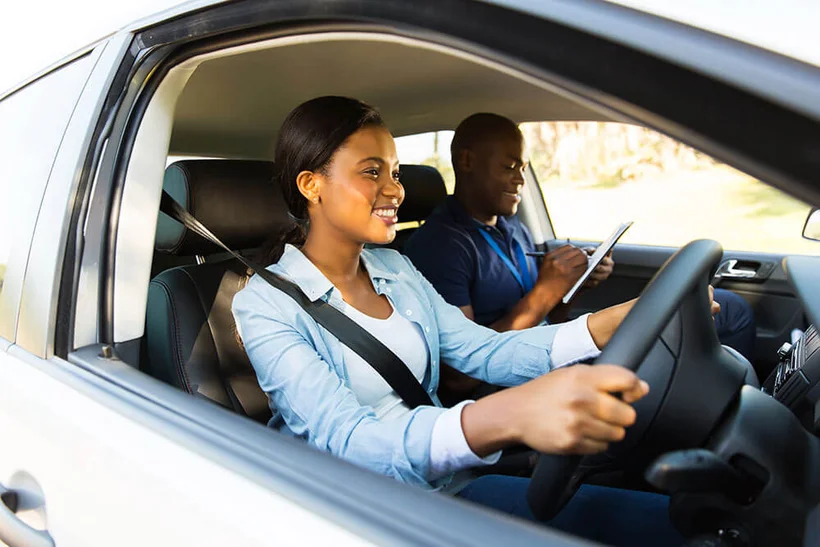
Choosing manual driving lessons over automatic comes down to the type of licence a learner wants and the driving experience they are looking for. A manual licence allows a driver to drive both manual and automatic vehicles, while an automatic-only licence restricts a driver to automatic vehicles. This flexibility is the main practical reason many learners choose manual lessons, even though the learning process typically takes more coordination in the early stages.Manual driving requires learners to actively manage clutch control and gear selection alongside steering and observation, which can mean a steeper initial learning curve compared with automatic lessons. Automatic learners typically progress to traffic situations sooner, since there is no clutch or gear mechanics to master first. However, many manual learners find that once clutch control becomes natural, the overall driving experience feels similar in terms of difficulty to automatic driving.
Vehicle availability is another consideration. Manual cars remain widely available across the used and new car markets, which can make manual driving a practical choice for learners who want the widest possible range of vehicles to choose from in the future. Automatic vehicles, particularly electric and hybrid models, have become increasingly common, but manual vehicles still make up a significant proportion of cars on the road.
Manual vs Automatic: Why Choose Manual
Neither manual nor automatic driving is universally better; the right choice depends on individual circumstances, future driving needs and personal preference. Learners who are unsure which route to take often benefit from discussing their options with an instructor before committing to a full course of lessons, particularly if their choice may be influenced by future vehicle ownership plans or job requirements that specify a particular licence type.
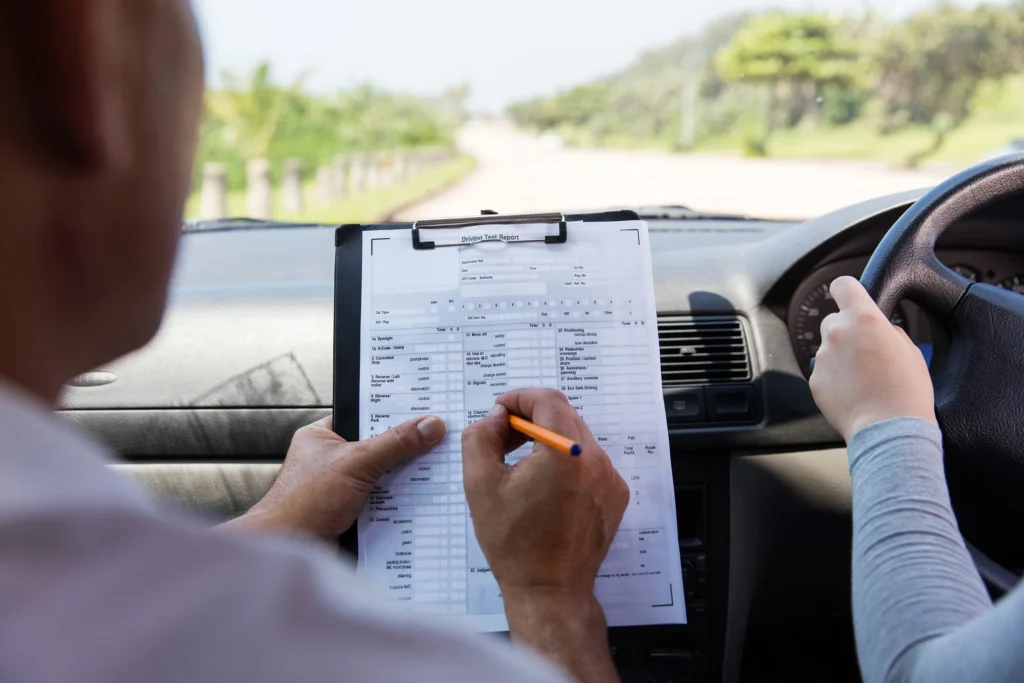
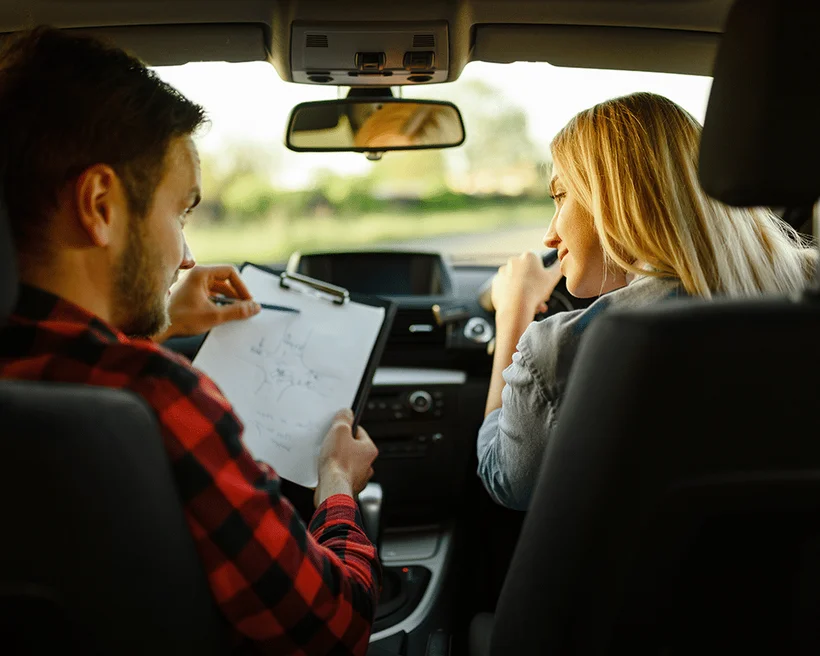
Preparing for the practical driving test in a manual car involves building consistent competence across clutch control, gear changes, observation, manoeuvres and independent driving, since all of these are assessed during the test. Instructors typically introduce mock test conditions once a learner is driving with reasonable independence, replicating the format and demands of the real test so that learners become familiar with what to expect.
Manoeuvres form a key part of test preparation for manual learners, since low-speed clutch control is required for parking and reversing exercises. Learners often practise these repeatedly in varied locations to build confidence in controlling the car precisely at low speeds without stalling. Smooth, controlled manoeuvring is generally seen as an area where extra manual-specific practice pays off, given the additional coordination required compared with automatic vehicles.
Independent driving, where the learner follows directions from a sat nav or traffic signs for a set period without turn-by-turn instruction, is another important area of test preparation. For manual learners, this means managing gear changes and clutch control while also making independent decisions about route, speed and positioning, which requires a good level of automatic coordination with the physical controls before independent driving practice becomes genuinely useful.
Hill starts and junction control are also commonly practised ahead of test day, since these situations require particularly precise clutch and accelerator coordination. Learners typically benefit from repeated practice at a range of different junctions and inclines, rather than becoming familiar with only one or two locations, since the test can include unfamiliar roads on the day.
Preparing for the Practical Driving Test in Manual
In the lessons leading up to a test, instructors often focus on consolidating existing skills rather than introducing significant new material, allowing learners to build confidence and consistency. Mock tests, feedback on recurring faults, and continued practice of manoeuvres and independent driving typically form the core of this final preparation stage, helping manual learners feel ready for the range of situations the practical test may include.
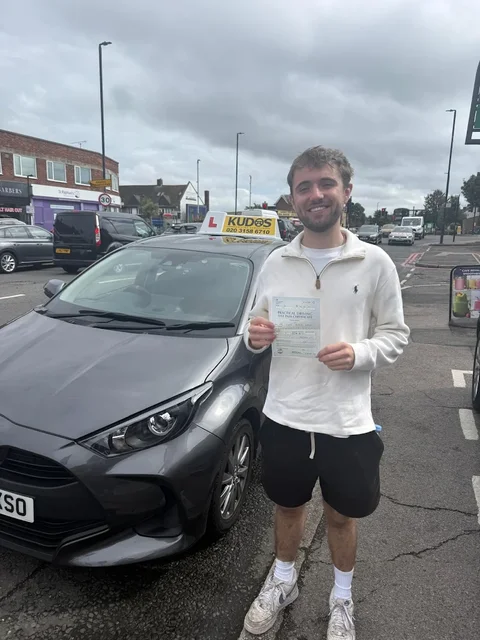
Driving lessons in Morden are available for learners at every stage, from complete beginners taking their first steps behind the wheel to more experienced drivers polishing specific skills before their test. Kudos Driving School provides tuition across the area, covering the London Borough of Merton in South West London, where learners encounter a mix of quieter residential streets, busy local roads and town centre traffic to practise in. Lessons are typically tailored to the individual, with instructors adjusting the pace and content of each session to match the learner's confidence and existing ability.
This page is relevant to a wide range of learners. Complete beginners will find it useful for understanding what to expect from their first few lessons, while nervous drivers may be reassured by the emphasis on structured, gradual progression. Learners who have already had some tuition elsewhere and are looking to continue locally will also find relevant information here, as will anyone comparing automatic and manual tuition or trying to work out how many lessons they might realistically need before booking a test.
The sections below cover the practical side of learning to drive in Morden, including how lessons are typically structured, the choice between automatic and manual transmission, what local roads and junctions tend to involve, and how to prepare for the practical test. There is also guidance on the factors that influence lesson pricing, since costs vary depending on individual circumstances rather than being fixed for everyone.
Morden's position at the southern end of the Northern line means it has a genuinely mixed driving environment. Learners here encounter everything from calmer side streets near residential areas to the more demanding traffic flow around the town centre, along with roundabouts, pedestrian crossings and bus routes that require sustained concentration. This variety can work in a learner's favour, since it exposes them to a realistic cross-section of situations they are likely to face once they pass their test, both locally and further afield.
.webp)